



The end of the handoff: Rewriting the rules of product development
Insights have a shelf life
By the time the handoff happens, the opportunity may already be gone.
Pali Dhanoya on the hidden cost of fragmented product teams.
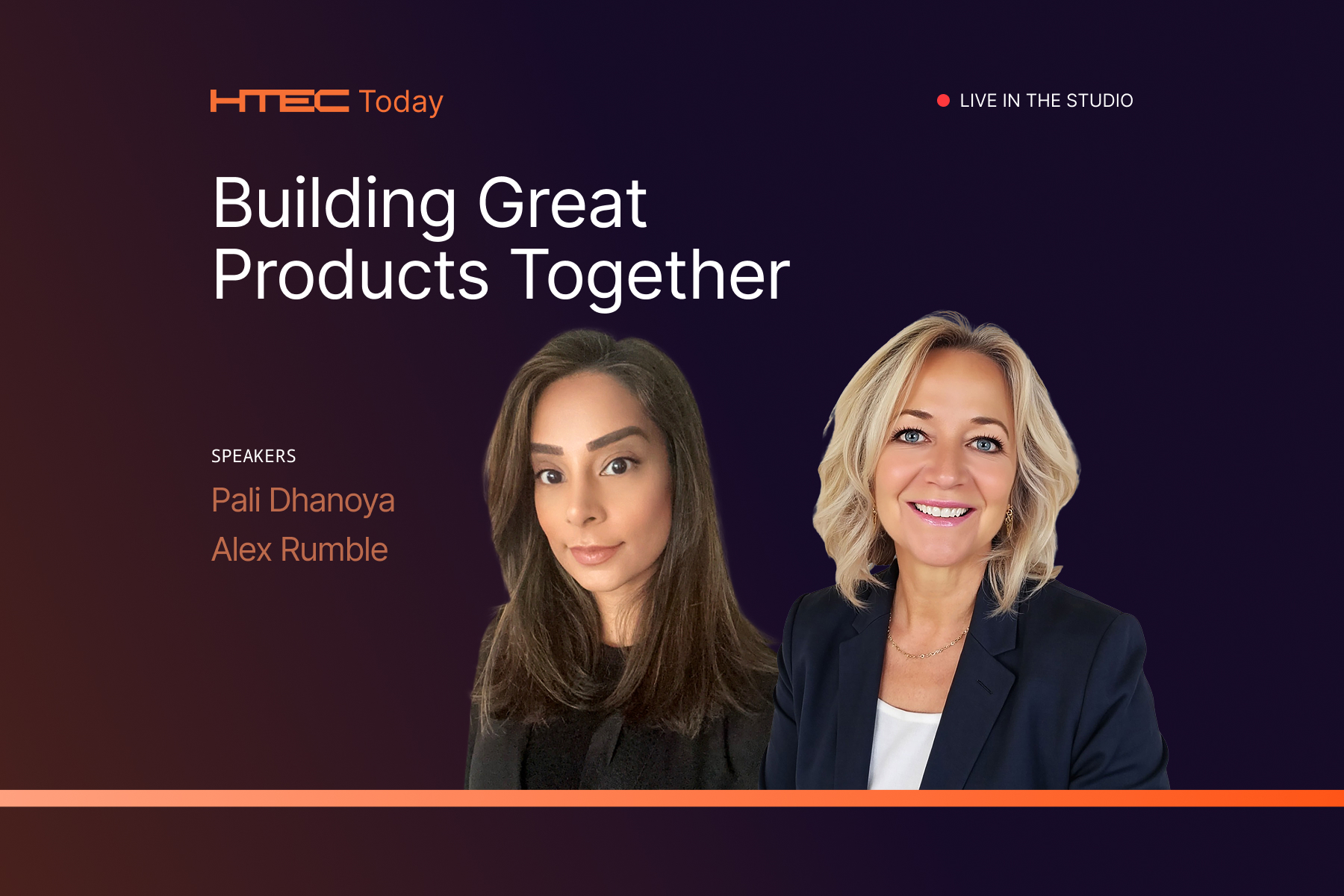
In her latest interview for HTEC Today, Pali Dhanoya, Head of Product Management, makes an argument that may appear obvious at the first glance but carries real structural weight underneath: get everyone in the room from day one. Product, design, engineering, and the client, with no sequential handoffs and no isolated discovery phases that feed briefs into a vacuum. It's a simple rule, but it sits on top of a much larger argument about how products get made, and why the companies still building sequentially are falling behind without fully understanding why.
Integration is an architectural decision
What Pali describes as essential is a shared mental model, a common definition of what "good" looks like before a single line of code or pixel gets committed. Genuine alignment on what quality means in context, whether that's speed, clarity, or emotional reassurance for the end user, established before the work begins.
Inconsistency in digital products almost never comes from poor individual execution. It comes from teams optimizing toward different, privately held versions of the goal, where everyone is working hard but toward slightly different destinations. Building that shared understanding upfront is what prevents the product from showing its seams in the final experience.
AI and the SDLC: Compressing the distance between insight and action
Traditionally, the distance between a user insight and a tested, living concept is measured in weeks or months. Interview insights move from synthesis to concepts, then into prototypes and validation, with each team passing the work to the next. Along the way, momentum slows, and the original context starts to fade, turning fresh insights into secondhand information by the time decisions are made.
When AI is embedded across discovery, design, and delivery simultaneously, that distance shrinks considerably. Synthesis accelerates, pattern recognition runs in parallel with ongoing discovery, and concepts can be stress-tested against fresher data earlier in the process. Pali draws a clear boundary around where AI creates value: removing mechanical work so that human judgment operates on better information and with less latency.
But the moments that shape a product still depend on humans: choosing the right direction at a critical turning point, earning trust from skeptical stakeholders, or making difficult tradeoffs that no model or prioritization framework can fully decide on its own. What changes is the volume of undifferentiated execution work surrounding those moments, and with it, where the best people are spending their time.
Building for a moving target
Pali pushes back on the comfort of a fixed roadmap, and the reasoning goes deeper than a preference for agility. A roadmap built on a single source of insight, whether a particular stakeholder, a specific dataset, or a research sprint that concluded months ago, will faithfully reflect a world that no longer exists. Technology is moving fast enough that assumptions baked into a sprint planned in Q1 can be materially wrong before that sprint closes.
Structured, intentional continuous discovery keeps insights feeding into the process at every stage rather than front-loading them into a phase that the rest of the project slowly grows away from. Our teams work closely with the client, often embedded in their environment, which means they receive real-time signals rather than wait for a scheduled review to learn that something has shifted.
That proximity is more than a way of working. It's a strategic advantage built directly into the model, one that helps organizations make better decisions, adapt faster, and build products that stay coherent as conditions change.
The best products aren't built through a chain of handoffs. They're built by the right people solving the right problem together from day one. If that's the kind of partnership you're looking for, let's talk.
About HTEC Momentum
HTEC Momentum is the product and design practice within HTEC Group, a global AI-first provider of complex software and hardware embedded design and engineering services. Formerly known as Momentum Design Lab, LLC, we have been building digital products for over 24 years — born and raised in Silicon Valley, championing user experience before UX was a recognized discipline.
Now operating as HTEC Momentum, the practice brings together the deep product thinking and human-centered design roots of Momentum Design Lab with the global engineering scale of HTEC. The result is an end-to-end capability: strategy, product management, design, and AI-native software development under one roof.
Whether you knew us as Momentum Design Lab or you’re meeting us as HTEC Momentum, the approach is the same. Ask the hard questions first. Build the right thing second.

Download this white paper
Complete the form below to download your copy of the report and find out how to accelerate growth through extraordinary customer experience.


Let’s partner to move your business forward.
Leave your details and we’ll get back to you.
Looking to join our team?
Visit our Careers page